

Why Microfrontends? Scale Your Apps with Webpack Module Federation -1
Core Ideas behind Micro Frontends

This story was originally published on Medium and is cross-posted here for a wider audience.
Hello everyone,
If you are working with frontend development probably you heard runtime, build time, microfrontend architecture, webpack, compiling, bundling, tree shaking. If you are following me I am sure you know that I am sharing what I have learning and applying in my current position as a full stack developer. Today I will share a short quick intro about micro frontend architecture using a webpack cool feature. I will make it a series of article because of importance of Microfrontend Architecture and definitely each interview you will be asking those important and fundamental concepts.

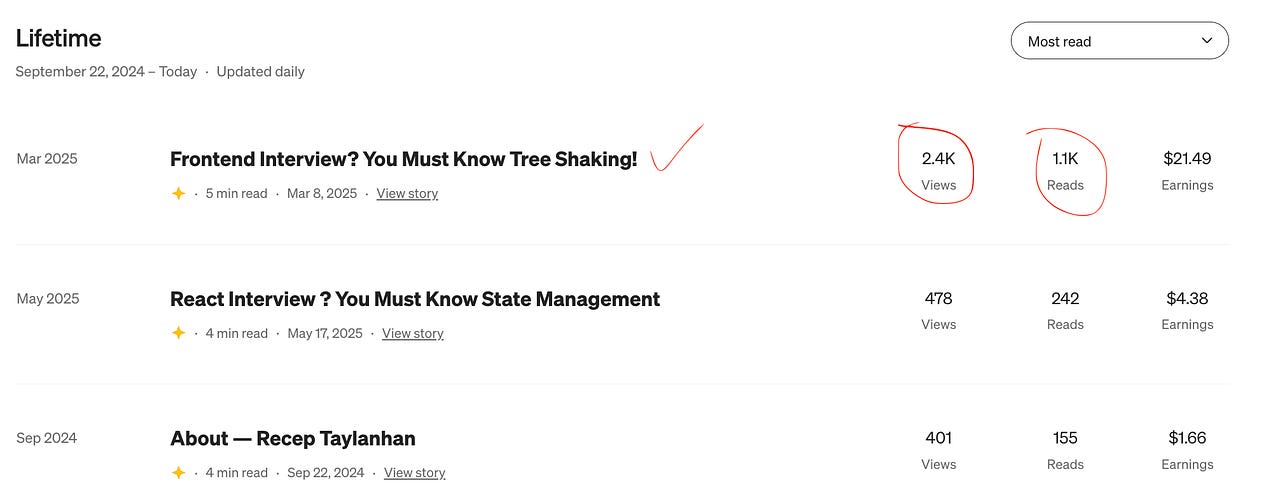
I would say my most-read article is about Webpack. You can start there to get initial insights and if you would like to learn how web app performance leaning with tree shaking.
What are micro frontend ?
In traditional frontend development, applications are usually built as a single, monolithic codebase — one repository, one deployment process, and often managed by one team. This approach works well for small to medium projects and sometimes even for larger ones.
Imagine building with LEGO bricks
Each brick is like a standalone micro frontend, complete with its own logic and design.
They all snap into a common layout, working together to form a complete interface.
You can modify or upgrade any piece on its own — without touching the rest of the structure.
Why you are using Micro frontend ?
If you are working with small team and small project that is totally fine to not use any micro frontend. But if you are working with a large app and huge org probably you should consider to use micro frontend across all other team. What I mean ?
Instead of one big app each team have a unique independent app
You have your own app, build independent component-modules
Use your own tech stack, React, Vue, Angular does not matter what other teams use
No matter what other teams deployment process or cloud
Because they are integrating at run time not build time.
Core Ideas behind Micro Frontends
Autonomy -Each part of the app can be released separately with minimal coordination.
Be Technology Agnostic- Teams can use their own tech stack and work independently.
Modular refactoring — You can modernize legacy apps gradually, without rewriting everything at once.
Flexibility — Different frameworks (like React, Vue, Angular) can coexist in the same app.
Scalability — Multiple teams can work in parallel, speeding up development and delivery.
I hope you get some idea for now so we will cover and go deep in the next article. If you would like to get notification for my articles please subscribe. Thanks for reading and see you next time !
If you want to support me, please feel free to subscribe and receive my articles in your email weekly.
Get more Interviews Tips