

Microfrontend ? Scale People Not Code !
Understanding why every programmer can write code, but not every programmer designs systems.

“Microfrontends aren’t a technology trend — they’re an organizational survival strategy.”
If that sounds dramatic, good — because you won’t understand it until you’ve seen a codebase crumble under its own success.
The Breaking Point
Your frontend probably started small a single repo, clean architecture, and a team that communicated in one Slack thread.
Then it grew.
New features. More developers. More opinions.
And suddenly…
Your build takes 40 minutes.
A small PR breaks production.
You can’t release without waiting for three other teams.
Sound familiar? That’s how most companies discover microfrontends, not through hype, but through pain.
When Freedom Turns Into Chaos
When I first joined a company adopting microfrontends, I thought it was about frameworks and tooling.
It wasn’t. It was about people.
Every team had its own goals. Billing wanted stability. Analytics wanted speed. Design wanted control.
So, naturally, each team built “their way.”
We ended up with:
Two design systems.
Three versions of React.
And navigation so inconsistent that users thought they’d switched products.
That’s when it hit me:
Microfrontends are not about splitting code. They’re about creating safe boundaries for humans.
We built a Frontend Platform Team.
Our team wasn’t to slow anyone down, it was to align autonomy with consistency.
We defined shared dependencies, CI/CD templates, and versioning rules.
Once those lanes were in place, teams started moving together, not against each other.
A Real Interview That Changed How I Explain Microfrontends
A few months later, I sat in an interview for a Senior Frontend Engineer position at a fintech company.
They were scaling fast and needed someone to bring structure to a frontend that was already showing cracks.
The interviewer, a calm but sharp engineering manager, looked at me and said:
“Recep, everyone says they know microfrontends. What’s the first thing that breaks when five teams start sharing one architecture?”
I smiled. Because I’d been there.
“Governance,” I said. “The moment you lose version alignment and ownership, everything collapses.
That’s why I start every setup with contracts — shared manifests, enforced React versions, automated validation before merge.
You can’t scale code without scaling discipline.”
He nodded. Then came another curveball:
“One of your remote apps fails to load in production. What happens next?”
“Ideally, nothing the user should ever notice,” I replied.
“You design for failure,wrap remotes with fallbacks, cache what matters, and degrade gracefully.
If your user feels the outage, your architecture failed, not your code.”
He smiled, not because it was textbook-perfect, but because it came from experience.
And then came the migration question that separates the hobbyists from the architects:
“You’re handed a 3-year-old React monolith. How do you migrate it to microfrontends without blowing it up?”
I leaned back.
“Not all at once. You start with the highest-change, lowest-risk feature — maybe a dashboard or navbar and federate that first.
You measure, iterate, and expand. Migration should feel like evolution, not surgery.”
That interview taught me something I still carry today:
Interviewers don’t test what you know, they test how you think.
The Reality Check Before You Go Microfrontend
Before you even touch Module Federation or Single-SPA, stop and ask yourself this:
Do you have a team problem or a code problem?
Because if it’s the latter, microfrontends might make it worse.
You should only consider them if:
You have several independent teams working on different verticals of the UI.
Releases are bottlenecked by a single monolith.
You already have CI/CD pipelines mature enough for parallel deploys.
If you’re a small team shipping one product line together — stay monolithic. You’ll move faster and sleep better.
Microfrontends are like a distributed system for the UI: incredible once you need them, painful if you don’t.
Let’s Talk Tools The Ones That Actually Help You
Webpack Module Federation :
https://webpack.js.org/
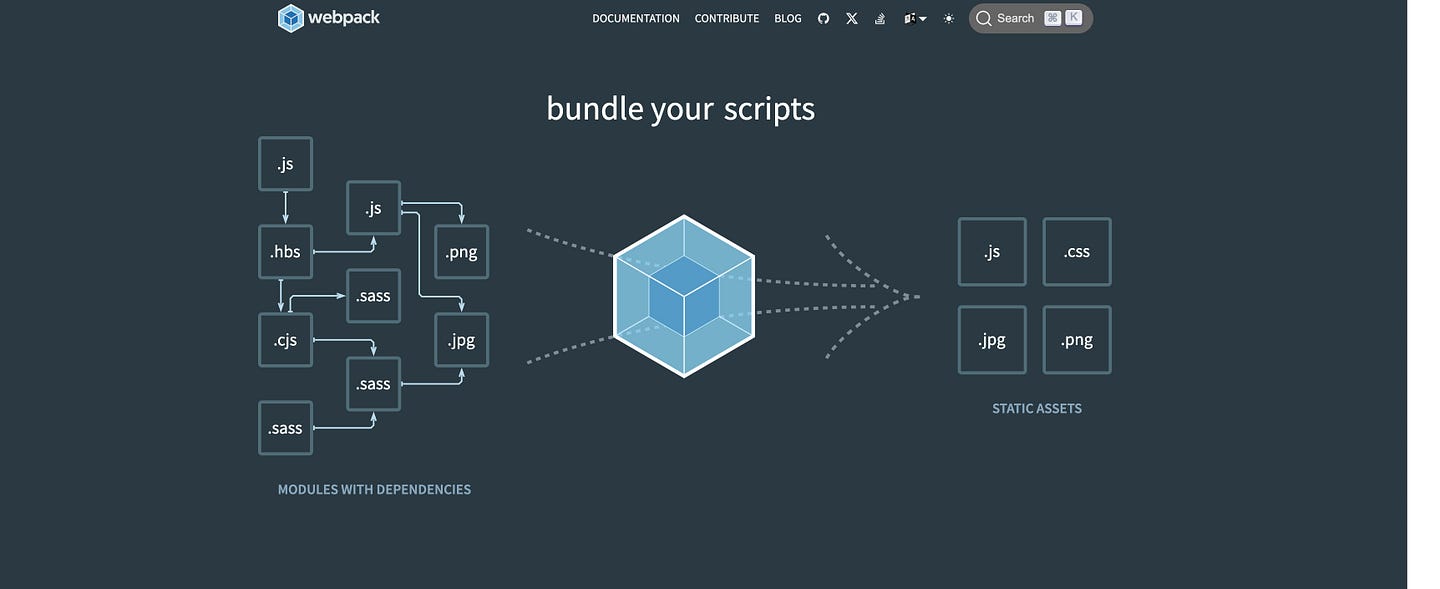
This is the backbone of most microfrontend setups today.
It allows apps to dynamically load code from one another at runtime — meaning each team can deploy independently without breaking the others.
The magic isn’t just technical — it’s psychological.
Teams feel ownership again. They deploy when ready, not when someone merges.
But it demands alignment. You can’t have three teams on different React versions and expect smooth sailing.
The rule I follow:
Share only what unites you, not what defines you.
React, analytics, design tokens yes. Business logic never.
Single-SPA
Think of Single-SPA as the host that keeps the peace when multiple frameworks coexist.
In companies migrating from Angular to React, or React to Vue, Single-SPA lets them share one shell while running multiple microfrontends side by side.
It’s not simple, but it buys you time and flexibility.
It’s the bridge between “where we are” and “where we’re going.”
Nx or Turborepo
These aren’t about microfrontends directly,they’re about sanity.
They let you manage monorepos or multi-repos with consistency, caching, and dependency graphs.
When ten teams are shipping simultaneously, Nx ensures you still know what’s building where.
Without it, you’ll spend more time debugging pipelines than writing features.
Storybook
If you only pick one UI-related tool, make it Storybook.
It forces teams to define and document components visually.
When each microfrontend team documents its shared components, you create a living design contract.
No more “my button looks different from yours.”
Automation as Architecture
If you want to scale, you can’t rely on memory or goodwill, you rely on automation.
In one of my projects, we created a simple rule:
Every microfrontend had to generate a manifest.json at build time.
It listed its exposed modules, routes, and shared dependencies.
Then CI/CD pipelines would check those manifests automatically.
→ If React versions mismatched failed.
→ If routes conflicted failed.
→ If someone shared a restricted dependency failed.
No angry Slack threads. No finger-pointing. Just systems enforcing consistency.
Automation isn’t about control, it’s about creating safety for autonomy.
How to Think About It
Imagine your frontend as a city.
Each microfrontend is a district it has its own architecture, culture, and rhythm.
The host app is the city’s infrastructure roads, electricity, authentication.
If each district builds roads differently, the city collapses.
But if they share common standards while staying free to evolve locally that’s harmony.
That’s what microfrontends are really about: governing complexity without killing creativity.
Be Engineer Not Just Coder
Over time, you realize you’re not just writing frontend code, you’re designing collaboration.
You start thinking less about props and more about boundaries, less about syntax and more about ownership.
You learn that:
Architecture is a social contract.
Governance is not bureaucracy — it’s trust at scale.
The best systems don’t need meetings to stay consistent.
My Closing Note
You might adopt microfrontends because your builds are slow or your teams are tripping over each other.
But you’ll stay with them because they teach you something deeper.
How to scale people, not just code.
Because in the end, architecture isn’t about technology.
It’s about creating systems that allow humans to do their best work without getting in each other’s way.
If you’re curious, build one yourself.
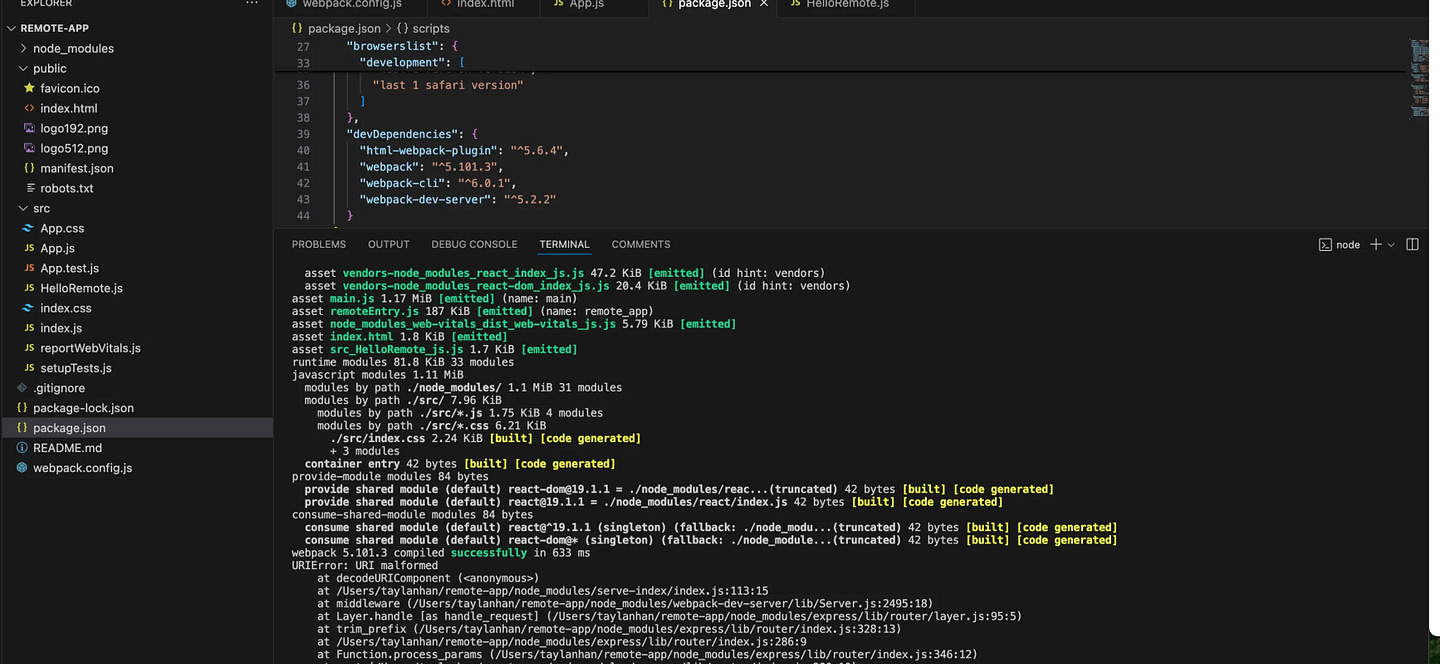
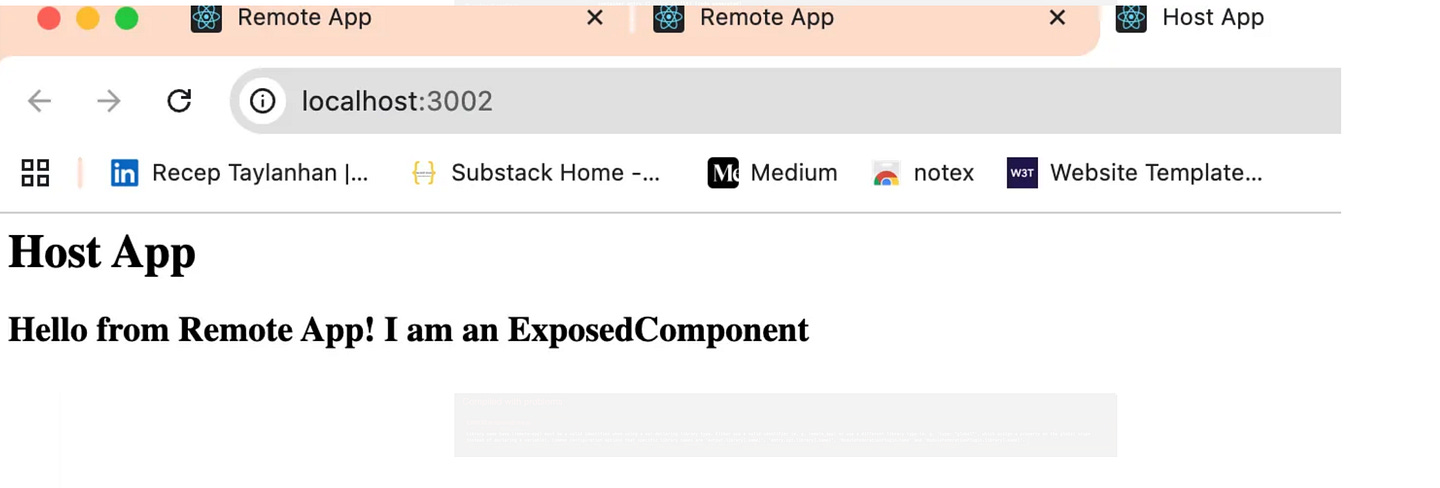
Spin up a host, add a remote, and watch them connect.
That single moment when two independent apps work in sync —
that’s when you feel what microfrontends really mean.
You stop being just a frontend developer.
You start becoming an architect.
Appreciate for your time and checkout my latest Interview topic experience : Sharing and managing state between components in React.js
Keep going, and success will come.
Good luck!
Let’s Connect : Substack | LinkedIn
Frontend Interview? You Must Know Tree Shaking!
Wasted 3 months medium.com
Frontend Interview? You Should Know Micro-Frontend Architecture!
Learn how to clearly explain Webpack Module Federation in interviews without overcomplicating.javascript.plainenglish.io
Why Microfrontends ? Scale Your Apps with Webpack Module Federation-2
remoteEntry.js, exposes components, run time, lazy import …javascript.plainenglish.io
Why Microfrontends? Scale Your Apps with Webpack Module Federation -1
Core Ideas behind Micro Frontendsmedium.com